Should you let AI manage your money? Everywhere you look, something promises to "let AI run your portfolio" — and I run my own leveraged, multi-strategy book, so I've thought hard about it. My answer is narrow but firm: I don't want AI trading my money. Not because AI is useless — it's genuinely good at some things — but because the moment a model can place orders on its own, I've handed the one thing I went independent to keep: the decision. What I want instead is an engine that does the tireless measuring and recommends an action, then stops and waits for me. It recommends; I decide. This is education, not personalized advice — but here's exactly why I draw the line there, and what "recommend-only" buys you that autonomous AI can't.
- The real question isn't "is AI smart enough?" It's who holds the wheel. An AI that trades holds it; an engine that recommends hands it to you.
- Software that acts on its own can be wrong at machine speed. Knight Capital lost about $440 million in roughly 45 minutes in 2012 when an automated trading system did exactly what it was told — just wrongly.
- Two problems with an AI that trades: it usually can't fully explain a decision, and its output can't be reproduced or audited — the opposite of what you want governing money.
- What I want instead is recommend-only: a deterministic engine — same inputs, byte-identical output, forever — that measures my book, flags what changed, and proposes an action I approve or reject.
- It also refuses to knee-jerk. Our two-week persistence rule means a breach must hold two consecutive weekly readings before it even recommends acting — so you respond to a trend, not a scary Friday. The rule applies with one deliberate exception — Forced, at 40% and above, acts on the first reading.
Should you let AI manage your money? The real question is who holds the wheel
Let me reframe the question, because the way it's usually asked hides the real trade. People ask "is AI smart enough to manage my money?" as if the only variable were intelligence. But intelligence isn't the thing I'm protecting. Control is. I didn't take my money in-house to hand it to a smarter black box than the last one — I did it to keep the decision on my side of the table. So the question I actually care about is: when this thing sees something it doesn't like, does it act on its own, or does it tell me and wait?
That single distinction splits the whole field. A robo-advisor and an autonomous "AI portfolio manager" both hold the wheel — they decide and execute on their logic, on their schedule, whether or not you'd have agreed. A governance engine, the way I build and use one, does the opposite: it never touches an order. It measures, it flags, it recommends — and then it stops, because the person who has to live with the outcome should be the one who pulls the trigger. To be clear, I'm not anti-AI. Models are genuinely useful for research, screening, drafting, summarizing. The line I draw isn't "no AI." It's no autonomous execution: nothing places a trade in my account but me.
What happens when software holds the wheel
The reason I care isn't hypothetical, and it isn't a fear of robots. It's that automated systems fail in a very specific way: correctly, quickly, and at scale. On 1 August 2012, the trading firm Knight Capital deployed a change to its automated trading system and, over roughly 45 minutes, the software fired off a torrent of unintended orders that cost the firm about $440 million — the figure Knight itself reported; the SEC’s order puts the loss above $460 million — nearly destroying a company that had been a pillar of US market-making (CIO). The system wasn't "dumb." It did precisely what it was told, at a speed no human could interrupt, and the humans only found out once the damage was done.
That's the shape of the risk with anything that trades on its own: the failure and the discovery arrive in the wrong order. A person acting slowly can catch themselves mid-mistake. Software acting autonomously executes the whole mistake first and reports it after. One honest caveat — Knight was a professional market-maker and the specific cause was a software-deployment error, not a rogue AI. But the lesson generalizes cleanly to any tool you'd let place orders unattended: the moment execution is automatic, your ability to say "wait, no" is gone.
A human acting slowly can catch himself mid-mistake. Software acting autonomously finishes the mistake first and tells you after. Speed is only an asset when the decision is right.
Two problems with an AI that trades: it can't explain itself, and it can't be audited
Set aside the dramatic blow-ups; there are two quieter problems that would bother me every single week. The first is explanation. Ask a modern machine-learning model why it did something and, at best, you get a plausible-sounding story generated after the fact — not the actual chain of reasons. For money I'm accountable for, "the model was confident" is not an answer I can accept or act on.
The second is reproducibility, and it's the one most people never think about. A lot of AI systems are non-deterministic: run them twice on the same inputs and you can get two different answers. That is the exact opposite of what you want governing capital. The engine I want is deterministic — the same inputs produce a byte-identical result, this week, next year, or when I re-check a decision I made in 2021. That reproducibility is what makes an audit trail real: I can point at last week's recommendation, see the precise numbers that produced it, and know it wasn't a mood. An autonomous AI trades and moves on; you're left holding positions you can't reconstruct the reason for. Governance treats your record as part of the product — the point isn't just to act, it's to be able to show your work, which is also what protects you from becoming your own single point of failure.
What I want instead: recommend-only
So here's the thing I actually want sitting over my portfolio — and the honest contrast with an AI that trades. Read it as two answers to one question: when the tool sees something, what does it do next?
| An AI that trades | A recommend-only governance engine | |
|---|---|---|
| Who executes | The software, on its own | You — nothing trades but you |
| Same inputs, same output? | Often not — non-deterministic | Always — byte-identical, deterministic |
| Can it explain the decision | A story after the fact | The exact numbers and rule that fired |
| Auditable a year later | Rarely | Yes — that's the point |
| Reacts to a one-day scare | Immediately | No — waits for a persisted signal |
| Who's accountable | Unclear — "the model" | You, with your reasons on record |
Notice the right-hand column isn't "smarter AI." It's a different job: measure faithfully, recommend clearly, and leave the decision — and the accountability — with the human. That's the whole posture of portfolio governance, and it's the same reason governance is the honest "fourth option" next to DIY, a robo, and an advisor in DIY, robo, RIA, or governance. It fuses what it measures — your allocation against the Incomestead Stack, your margin zone, your cadence — into one honest number, the Governance Score, for how well you're governing. The engine never grades the market or promises to beat it. It grades the discipline, and hands you the call. The sharpest objection to that posture is that it leaves the weak link exactly where it was: the best case that a system which only recommends still leaves you as the single point of failure.
Why recommend-only beats fast: a jumpy-Friday example
Here's a concrete case where "waits and recommends" beats "acts instantly." Say I'm running a $2,800,000 book with a margin loan against it, sitting at 33.8% utilization, already in the Harvest zone — one rung below the danger end of our four-state margin gauge (Clear / Harvest / Freeze / Forced). One ugly Friday the market drops 4% and my utilization spikes into Freeze on that single print. An autonomous system built to "de-risk" might liquidate into that dip on the spot — locking in the loss at the worst possible moment. My engine doesn't. It flags the Freeze reading and, under the two-week persistence rule, waits: a breach has to hold across two consecutive weekly snapshots before it recommends acting. The following week the market retraces, utilization falls back to Harvest, and the right action turns out to have been no action at all. The speed the AI was proud of would have cost me real money; the deliberate pause saved it. (Had the Freeze persisted into a second weekly reading, the engine would have recommended trimming — and still left the trade to me.) Slower, on purpose, is a feature — not a bug — when the machine is only allowed to recommend.
The Recommend-vs-Trade Test
Before you let any tool — AI-branded or not — near your accounts, run it through these five questions. They take a minute and they cut straight past the marketing.
- Can it place a trade without me clicking? If yes, it holds the wheel — decide whether you truly want that.
- If I run it twice on the same data, do I get the same answer? Non-deterministic is fine for brainstorming, not for governing capital.
- Can it show me the exact numbers and rule behind a recommendation — or just a confident summary?
- A year from now, could I reconstruct why it told me to act? If not, there's no audit trail.
- Does it wait out a one-day scare, or react to every jump? A tool with no persistence rule will whipsaw you.
Every "no" is a place the tool is taking a decision you should be keeping. Recommend-only passes all five by design.
None of this requires you to distrust technology. I built a piece of software precisely because I wanted the tireless part — the weekly measuring a human forgets — without the part that scares me, the autonomous hand on the order button. That's the balance recommend-only strikes: the machine does what machines are good at, and the human keeps what humans should never give away.
Frequently asked questions
Should I let AI manage my investments?
Split the word "manage" first. If it means research, screening, or summarizing, AI can genuinely help. If it means placing trades on its own, that's a bigger decision than "is the AI smart," because you're handing over control and, with it, accountability. My own line is recommend-only: let software measure and propose, but keep execution — and the decision — with yourself. There's no universal right answer, but decide it on who holds the wheel, not on how clever the model sounds.
Is an AI trader better than a human at investing?
Sometimes faster and more consistent, yes — but speed and consistency only help when the decision is right, and an autonomous system executes a wrong decision just as fast as a right one. Knight Capital's automated system lost about $440 million in roughly 45 minutes in 2012 doing exactly what it was told. The advantage you actually want from software isn't autonomy; it's tireless measurement that still leaves the final call to you.
What's the difference between AI trading my money and a governance engine?
An AI trader decides and executes on its own logic. A governance engine never places an order — it measures your portfolio, flags what changed, recommends an action, and waits for you to approve or reject it. It's also deterministic and auditable: the same inputs always produce the same, explainable result, so you can reconstruct any recommendation later. One holds the wheel; the other hands it to you.
Can AI beat the market?
That's the wrong question for this decision, and a governance engine deliberately doesn't try to answer it — it never predicts or grades the market. Even if some system could beat the market on average, letting it trade autonomously means accepting its worst unattended moments too. I'd rather have a tool that makes no market promises, measures my own discipline honestly, and leaves every trade to me.
Do this next
The Weekly Governance Report is recommend-only on one page: your allocation against target, your margin zone, a single Governance Score, and — when something's off — a clear recommended action, ranked, that you choose whether to take. Nothing is ever executed for you. The free Governance Score puts one number on how well a book is governed, from what you type in — recommend-only, and nothing leaves the page.
I don't want AI trading my money because I don't want to be the last to know. I want the opposite arrangement: a tireless, deterministic instrument that watches every week, shows its work, refuses to panic on a single bad Friday, and then — every time — hands me the decision. The machine measures. The human governs. That's not a limitation I'm settling for; it's the entire point.
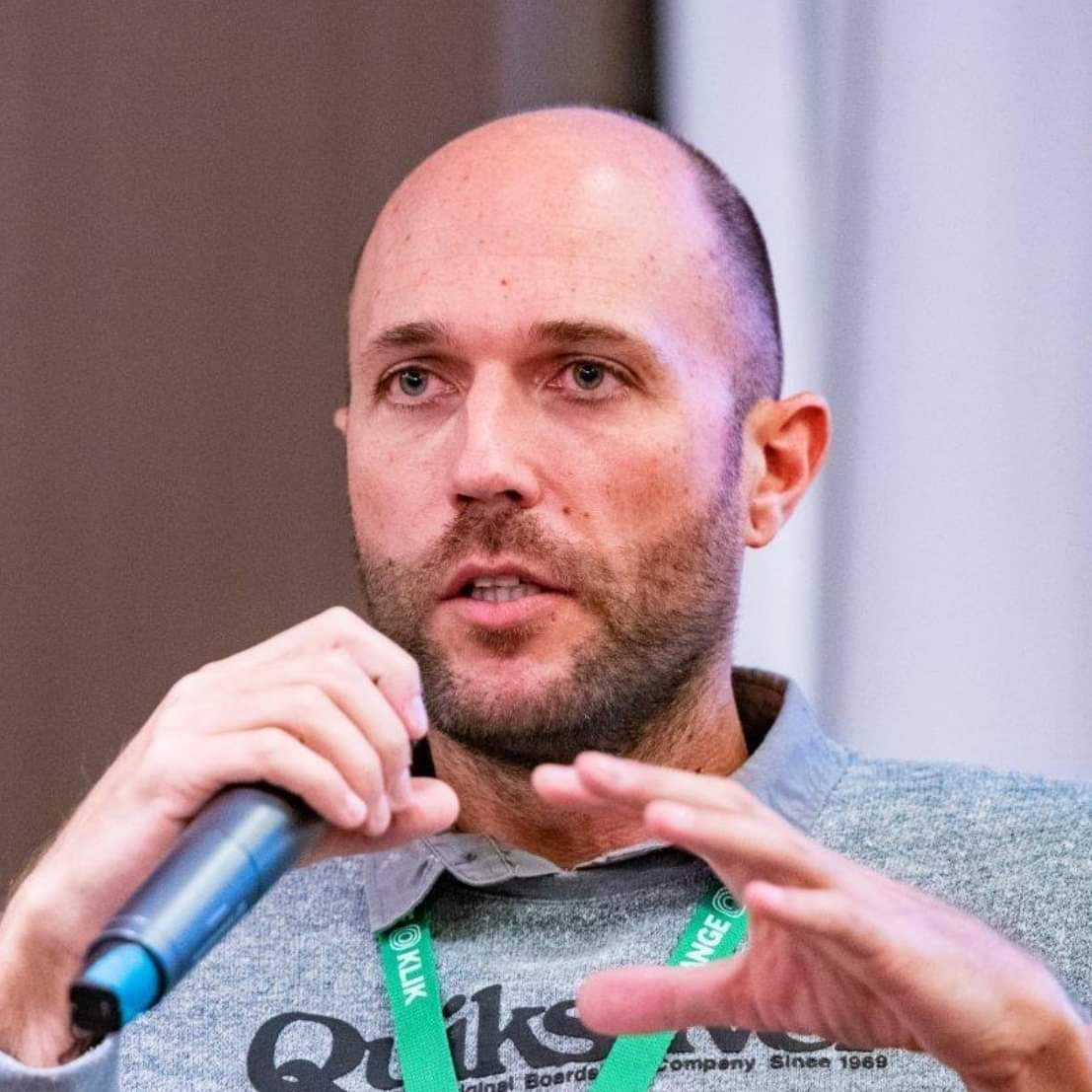
Stefano Starkel is a practitioner, not a licensed adviser, and runs a leveraged portfolio under the governance process described here. This article is education, not personalised financial, tax or legal advice. Figures are illustrative and computed for this article. Nothing here is a recommendation to use or avoid any particular software, service or adviser — including my own.
Incomestead recommends. You decide.